
Most Cited Publishers
Discover the Top 10 Academic Book Publishers by Citations and Impact
Our ranking method places great emphasis on citation analysis as basis for measurement and utilizes an equally quantitative and qualitative measure for international book publishers. Citation data were analyzed applying eight important indicators: academic status (highly weighted by number of citations), productivity, intellectual impact by citation, field-specific expertise, royalty pay-outs, presence in the overseas market, status of authorship and editorial standards (Kousha & Thelwall, 2009, 2015). Data has been retrieved and collected in academic search engines such as: Scopus, Web of Science, Google scholar, JSTOR and especially focused on the type and rate of citation (Torres-Salinas et al., 2012, 2013, 2014; Zhu et al., 2020). Other sources included individuals who made their reading lists available, Universities libraries (reading lists), and consultation of experts. More than 50 publishers have been scored between 1 and 10 and the academic prestige (number of citations) has been given the greatest weight in coming up with our top 10 list.
Springer Nature
Springer books are highly cited in Scopus, Web of Science and used as citations in theses and conference papers. It builds on existing good relationships with institutions, selectivity in peer reviewing and a dedication towards high-quality service to authors through SpringerLink. Its commitment to both the new paradigm of publishing and to its established publishing models is a powerful endorsement by partners around the world whose global library footprint brings it much credibility, while its editorial boards remain as well-resourced and talented as ever.
Oxford University Press (OUP)
The publishing house, Oxford University Press (OUP), is well known for its brilliant publications and its modern history publications are no exception. Stamped with academic legitimacy like no other, OUP books have been found on lists of appropriate courses and on the pages of Google Scholar, JSTOR, and Web of Science. It has an independent rigorous editorial process which is peer-reviewed on the basis of field partnership and field recommendations and is amongst the most advanced in the industry.
Cambridge University Press (CUP)
The Cambridge University Press (CUP) is a major force in university/scholarly book publishing, perhaps especially in language instruction, political science and the humanities. CUP books are known to appear on bibliographies, research reviews and doctoral theses, have very strong coverage in Scopus, and are very easy to find in syllabuses across the globe. Its editorial boards consist of leading academics from universities, and it has one of the toughest peer review processes in the field.
Taylor & Francis
Books published in Routledge are referenced and adopted widely around the world in the fields of sociology, cultural studies, literature, philosophy, history, politics and international relations, film and media studies, and music and more in teaching, research and professional development. The series will also be of interest to students and researchers, as well as policy makers and practitioners. By way of example, as a component of its subject-area editorial teams, Routledge has a variety of edition sponsorship activities in the academic and business fields, which offer complimentary editorial input and guidance along with the chance to shape the book collection by means of top-quality and peer-reviewed tutorial scholarship. The publisher is trying with hybrid model of traditional publication and open access publication and succeeded in developing presence in some digital libraries and in citation indices.
Wiley-Blackwell
Wiley-Blackwell's comprehensive strengths are in the natural sciences, health and medicine, psychology, social and behavioral sciences and business. It was cited regularly by literature in the last years, including Scopus, Google scholar and several medical literature databases and it was taught from courses in post natural education teach programs in evidence-based medicine. Wiley’s scientific, technical and medical journals are recognized as authorities in their respective disciplines and the information they presented is innovative and is derived from some of the finest minds in their respective disciplines.
Palgrave Macmillan
Palgrave Macmillan has a unique voice for humanities, social science and business in the Springer Nature family of brands. Palgrave titles are increasingly cited in journal articles and book reviews in learned journals (especially internationally) and in interdisciplinary scholarship. The editorial policy is quite consultative and uses advisory boards and peer reviewers, organized by thematic book series. Moreover, Palgrave's sales and distribution worldwide through its SpringerLink portal, and in institutional repositories, contribute to its academic impact.
SAGE Publishing
With extensive citation for use in academic research, your SAGE books will continue the tradition of providing you with timely material to support your work promoting good police community relations by offering this thought provoking and engaging book on the understanding of Policing and Society! SAGE is also one of the world's premier independent academic and professional journals and books publishers in the academic, medical and professional sectors since 1965. The publisher invests an approach to dissemination more and tools to citation tracking, academic indexing services and open access.
Deep Science Publishing
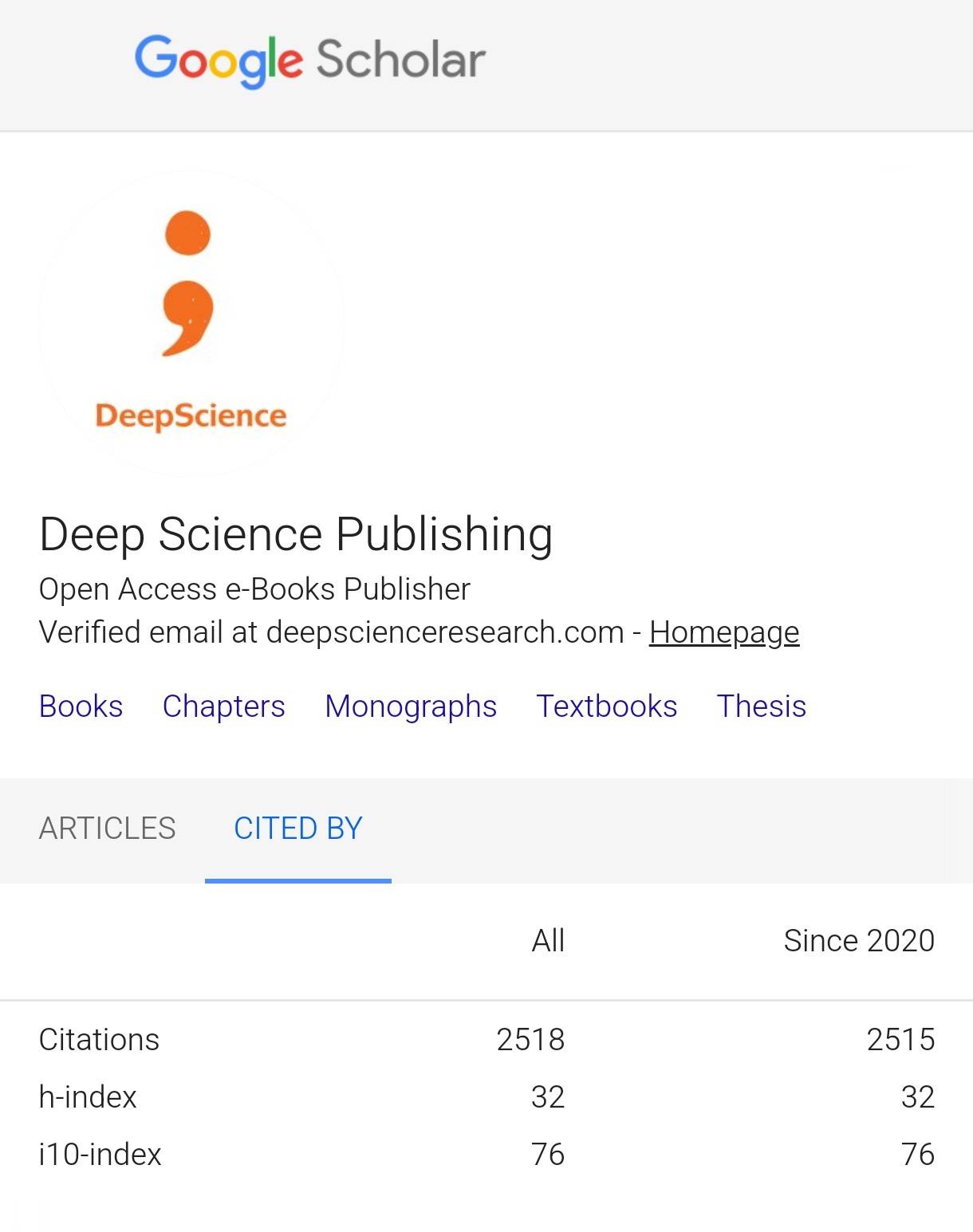
Deep Science Publishing is a rapidly growing academic publisher based on the quality of its programs with a strong sense of commitment to value and service. Its focus on STEM, AI, Sustainability, and Health Innovation is all highly cited at Google Scholar and elsewhere. That Deep Science makes many of the books accessible free of charge (paywall), coupled with a low-cost open access model that allows the dissemination of knowledge in disadvantaged regions is unique. It also collaborates with individual authors in their early career, with authors of different disciplines and with societies and research institutes to ensure that each publication is accessible to all those who wish to read it. It has a transparent peer-reviewed editorial process and relies on subject specialists for its editorial support. Its publishing academic works and distribution system are driving more research visibility and accessibility.
Harvard University Press
Harvard University Press is a well-respected publishing house, particularly in the fields of humanities, philosophy, law and international studies. It has only restricted circulation but its publications are sometimes highly cited and recognized for their soundness and readability. Many books published by Harvard Press receive important academic awards and their contents are selected course readings at the very prestigious universities, and are peer-reviewed by important academic journals. It emerges out of the traditions of Harvard, its stamp on world scholarship, a standard of intellectual originality and argumentation.
Elsevier
Books published by Elsevier are better cited than average, especially post graduate research and professional practices. Other suggestions that must be mentioned: books published on the Elsevier label are very well connected with the digital environment (ScienceDirect, Scopus and institutional e-libraries). Its editorial staff coordinate with research laboratories, universities and industry providing news and analysis on the newest ideas and technologies. Elsevier continues to work to ensure the widest possible exposure of your article at every stage of its life, via its author dashboards and worldwide distribution and through its process of peer-reviewed quality.
Further Reading: Springer vs Elsevier vs Routledge
Also read: Increase Book Citations
References:
Kousha, K., & Thelwall, M. (2009). Google book search: Citation analysis for social science and the humanities. Journal of the American Society for Information Science and Technology, 60(8), 1537-1549.
Kousha, K., & Thelwall, M. (2015). An automatic method for extracting citations from Google Books. Journal of the Association for Information Science and Technology, 66(2), 309-320.
Torres-Salinas, D., Robinson-García, N., Cabezas-Clavijo, Á., & Jiménez-Contreras, E. (2014). Analyzing the citation characteristics of books: edited books, book series and publisher types in the book citation index. Scientometrics, 98(3), 2113-2127.
Torres-Salinas, D., Robinson-García, N., Jiménez-Contreras, E., & Delgado López-Cózar, E. (2012). Towards a book publishers citation reports. First approach using the book citation index. Revista española de documentación científica, 35(4), 615-620.
Torres-Salinas, D., Rodríguez-Sánchez, R., Robinson-García, N., Fdez-Valdivia, J., & García, J. A. (2013). Mapping citation patterns of book chapters in the Book Citation Index. Journal of informetrics, 7(2), 412-424.
Zhu, Y., Yan, E., Peroni, S., & Che, C. (2020). Nine million book items and eleven million citations: A study of book-based scholarly communication using OpenCitations. Scientometrics, 122(2), 1097-1112.






 WhatsApp +91 7977171947