
Top 10 Book Publishers in India
Current methodology involved both quantitative as well as qualitative research to come up with a balanced list of top 10 book publishing houses in India. Over 50 publishers were listed before the selection of the final 10. The eight criteria used in evaluating each publisher are academic prestige, publication volume, scholarly impact, subject specialization, author royalty and support facilities, international distribution and accessibility, quality of the authors' work and quality of editorial and peer-review procedures (Thompson, 2005, 2013, 2021; Torres-Salinas et al., 2014; Zuccala et al., 2015). Academic prestige was given the greatest consideration and how the press is viewed academically as a whole (Clark & Phillips, 2008; Greco et al., 2013; Schiffrin, 2001). In addition, a strong consideration was the level of specialization in the field of the book (the subject area) as well as the quality of editorial work. Each publisher's own lists, annual reports and university reading lists, as well as information from academic databases and library catalogues such as Scopus and Web of Science, JSTOR, Google Scholar, WorldCat and the Library of Congress, were used.
Here are the top names in Indian top book publishing houses, based on the methodology above:
Oxford University Press India
Oxford University Press has been active in India since 1912 when the first title published by its Bombay, India office was Essentials of Psychology by S. Radhakrishnan. For more than a century, OUP India has become one of India's most distinguished academic publishers that each year produce thousands of new publications and resources in the fields of history, philosophy, law, economics, sociology, literature, and medicine. Its academic list is sent worldwide via Oxford's international network and this provides the real way into the international arena for Indian scholars. OUP India continues to be a benchmark for authors in India, if they are looking for a weighty University Press with an institutional credibility.
Deep Science Publishing
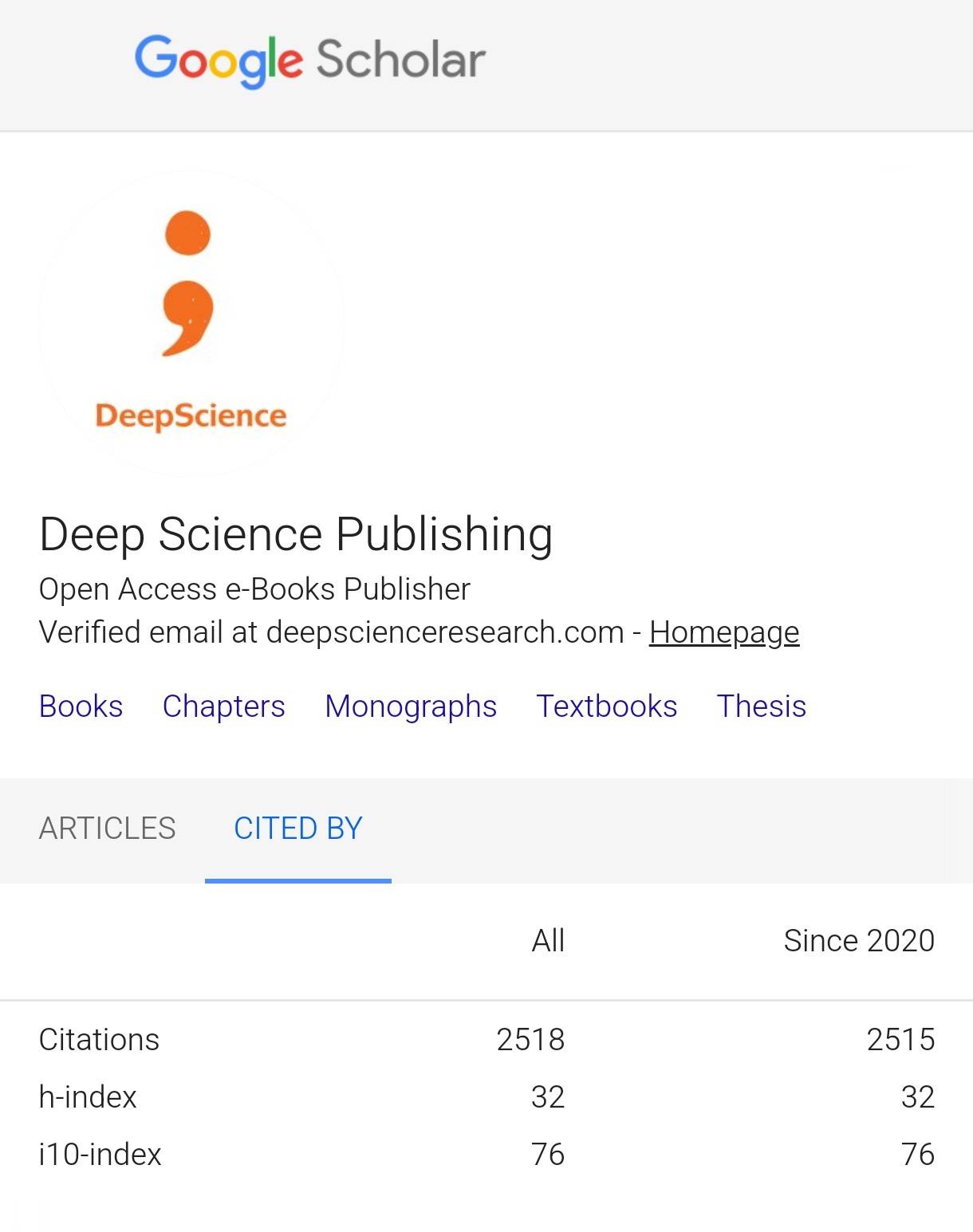
Deep Science Publishing is a fully open access academic press, based and operational in India, United States, United Kingdom and Turkey, that publishes author books, edited books, textbooks, monographs and thesis-based books in a wide spectrum of fields. All titles are published under a Creative Commons licence, and are indexed by Google Scholar, Crossref and OAI-PMH with much shorter publication cycles. Deep Science Publishing also follows the traditional method of book publication, acquisitions and royalties in addition to affordable charges a book processing fee payable by the author for open access. It can be a viable alternative for authors who value speed of publication, publication cost, freedom of access, and open access.
Cambridge University Press India
Cambridge Foundation Books publishes original, academic and educational books that are used extensively in Universities throughout India and the rest of the subcontinent, including Pakistan, Bangladesh, Nepal, Bhutan, Sri Lanka and the Maldives. The press also has seven branch offices in Delhi, Mumbai, Kolkata, Chennai, Bengaluru, Hyderabad, and Pune and boasts a surprisingly robust distribution network on the ground, considering it's an international publisher. Cambridge also serves as the exclusive distributor of several reputable presses to focus on the South Asia region.
Springer Nature India
Since the formal starting of Springer Nature in India back in October 2002, it is now an important key player in the country's scientific and scholarly publishing industry. It is a part of the worldwide Springer Nature group that helps Indian researchers access their portfolio of hundreds of thousands of books and thousands of journals in areas of medicine, physics, engineering, computer science, mathematics and the social sciences. Its outputs for the Humanities and Social Sciences, Espacios de Palgrave Macmillan, are in addition to its impressive science, technology and medicine line-up, providing an unrivalled range of subject areas within one publishing house. Springer Nature's longstanding open-access agreements with Indian Institutions and seamless cross integration with global citation databases provide Indian scholars with an incomparable blend of quality and reach.
SAGE Publications India
Founded in New Delhi in 1981 by Sara Miller McCune, George McCune, and Tejeshwar Singh, SAGE Publications India has earned a solid reputation as a publisher of critical, engaged scholarship in the social sciences, humanities, and business studies. SAGE India offers recognized peer reviewed journals like India Quarterly, Studies in History amongst others which are published in collaboration with reputed academic institutions and are included in global citation indexes. SAGE's performance and achievement with editorial and publication at industry events, such as the Independent Publishing Awards, is recognized globally.
Taylor & Francis / Routledge India
With a New Delhi office since over 20 years (and an additional office at Bengaluru), Taylor & Francis, Inc. whose foundation goes back to 1798 and their flagship humanities and social sciences imprint, Routledge, to 1836. With a history of more than 200 years of publication, it publishes several thousand new academic titles every year, both individually and in cooperation with the associated imprint CRC Press, all over the world.
Wiley India
Since 1966, Wiley has been represented in the Indian market, since 2006 it has set up regional publishing businesses on the Indian subcontinent with headquarters in New Delhi and regional offices in Mumbai and Bengaluru. With over 220 years of publishing history around the world, Wiley India has established a fine reputation in the fields of Engineering, Computer Science, Business and Management and Physical Sciences, particularly its Textbook Series, which was widely adopted across Indian universities.
Orient BlackSwan
Besides being one of the most historically significant Indian homegrown academic publishing firms, Orient BlackSwan has been publishing in India since 1948 (previously Orient Longman). It is with a well-researched scholarship, particularly in the humanities and social sciences mainly related to Indian history, literature in translation, and culture that the Hyderabad based organization has been long celebrated and obtained its current name in 2008. via imprints like Permanent Black and Universities Press, Orient BlackSwan then ventures into professional and scientific publishing including biotechnology, computer science and engineering.
Pearson India
Pearson India is a top publishing house in higher education and is especially strong in the fields of engineering, computer science, mathematics, economics, business, and the humanities and social sciences. It is a part of the globally known Pearson group; it also has a long history of being the world's leader in English Language Teaching materials. Pearson's higher-education titles are created and vetted by seasoned academics, and are redundant on university syllabuses in India; online learning solutions complement its print catalogue by putting the learning material within the reach of these students.
McGraw Hill Education India
Known as Tata McGraw Hill till 2013, the Indian roots of McGraw Hill go to 1970 when it came on the scene as a joint venture with the Tata Trusts, later becoming a Company of McGraw Hill in 2013. The publisher is based in Noida and has published over two thousand titles in India in engineering, business, the sciences and competitive examination preparation here, in collaboration with Indian academic institutions.
How to Choose the Right Book Publisher in India for Your Book
A ranking is a starting point, not a final answer. The best book publisher depends on discipline, intended audience, and career stage. Different researchers' needs can vary, such as a Sanskrit researcher who might prefer a specialist house with broad subject expertise, or a management researcher who might tournament a particular publisher with solid course adoptions and citations in management schools. When contemplating the submission of a book proposal, authors will want to first look at the publisher's current title list for their subfield, determine the quality of the publisher's referees, and consider the workflow of the publishers and where their readership is located. Subsidiary rights and royalty terms, along with long-term support for backlists, also need to be considered, as books may have a lifespan well beyond their initial print run.
Frequently Asked Questions
Which is the best publisher in India for academic and research books?
In India there would not be a best publisher for all the fields out there, it depends on subject area. Oxford University Press India (OUP) and Cambridge University Press India (CUPI) are generally considered the most prestigious names in the humanities and social sciences disciplines with Springer Nature India and Wiley India better suited for scientific, technical and medical research.
What makes a book publisher "academic" rather than commercial?
In academic, manuscripts go through a formal process of peer review before being published, and there is a strong emphasis on the accuracy and scholarly contribution of the article rather than any commercial success.
Do Indian academic publishers accept international authors?
Yes. Many of the publishers such as Oxford University Press India, Cambridge University Press India, Springer Nature India, and SAGE Publications India.
How long does academic publishing typically take in India?
Peer-reviewed academic books typically take several months to a year or more under normal circumstances.
Is self-publishing a viable alternative to these publishers for scholarly work?
For very specific research reports, working papers, or personal academic projects, it may be appropriate to self-publish, but there is an absence of peer credibility, citations, and placement in university libraries that a traditional academic publisher would include. Traditional academic publishing is likely the better route to take for authors looking to be recognized in a discipline and/or to make their work citable and courseware.
Also read Top 10 Self-Publishing Book Publisher
Learn more in How to Apply for ISBN in India
References:
Clark, G. N., & Phillips, A. (2008). Inside book publishing. London: Routledge.
Greco, A. N., Milliot, J., & Wharton, R. M. (2013). The book publishing industry. Routledge.
Schiffrin, A. (2001). The business of books: How the international conglomerates took over publishing and changed the way we read. Verso.
Thompson, J. B. (2005). Books in the digital age: the transformation of academic and higher education publishing in Britain and the United States. Polity.
Thompson, J. B. (2013). Merchants of culture: The publishing business in the twenty-first century. John Wiley & Sons.
Thompson, J. B. (2021). Book wars: The digital revolution in publishing. John Wiley & Sons.
Torres-Salinas, D., Robinson-García, N., Cabezas-Clavijo, Á., & Jiménez-Contreras, E. (2014). Analyzing the citation characteristics of books: edited books, book series and publisher types in the book citation index. Scientometrics, 98(3), 2113-2127.
Zuccala, A., Guns, R., Cornacchia, R., & Bod, R. (2015). Can we rank scholarly book publishers? A bibliometric experiment with the field of history. Journal of the Association for Information Science and Technology, 66(7), 1333-1347.






 WhatsApp +91 7977171947