
Representation of women in Indian television animation: A gendered media analysis
Synopsis
This paper examines the representation of women in Indian television animation and explores how gender roles are constructed and communicated through children’s animated shows. The study analyses popular Indian children’s television channels and situates animated content within a broader cultural context. Through this context, children learn and internalize social values and gender norms. As a major form of children’s media consumption, television animation plays an important role in shaping early thoughts about identity, behaviour, and social relationships. The study adopts a mixed-methods approach, combining quantitative content analysis with qualitative thematic analysis. It examines the visibility of female characters, their narrative roles, and their visual and behavioural portrayal. Drawing on Social Learning Theory and the concept of Cultural Hegemony, the study argues that repeated exposure to such portrayals can normalize patriarchal values. These patterns may influence how children understand appropriate gender behaviour. The paper concludes by emphasizing the need for more inclusive, diverse, and empowering representations of women in Indian television animation and calls for further research in this significant yet underexplored field.
Downloads
Pages
5-13
Published
11 April 2026
Copyright (c) 2026 Sayak Pal, Sharmila Kayal, Reshmi Naskar; Piu Banerjee, Ashique Rashul, Nilofar Yasmin, Gauri S. Matekar, Dnyaneshwar B. Shirode, Debastuti Dasgupta, Rick Sarkar, Harsha V. Patil, Soumyadeep Sen, Anmol Shekhar Srivastava, Jaya Bharti, Sananda Sen, Debasmita Biswas, Debarpita Naha, Baishali Deb Roy, Abhishek Bhattacharjee, Doyel Dutta
How to Cite
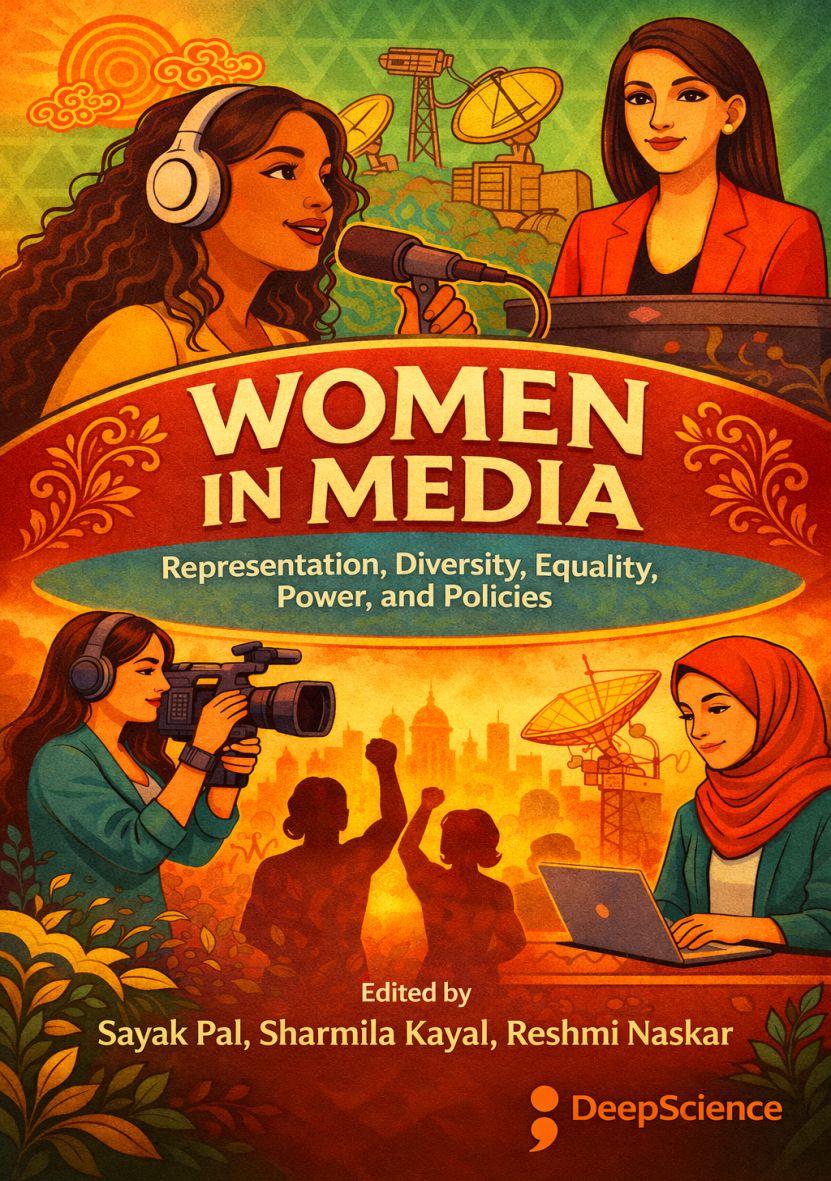
Banerjee, P. (2026). Representation of women in Indian television animation: A gendered media analysis. In S. Pal, S. . Kayal, & R. Naskar (Eds.), Women in Media: Representation, Diversity, Equality, Power, and Policies (pp. 5-13). Deep Science Publishing. https://doi.org/10.70593/978-93-7185-912-7_1
Download Citation






 WhatsApp +91 7977171947