
Cardio Nutraceuticals: Bioactive Compounds, Mechanism and Clinical Potential
Synopsis
Abstract
The global spread of cardiovascular disorders serves as the leading cause of human illnesses and deaths which requires doctors to use multiple treatment methods that extend beyond traditional medication. Nutraceuticals which include various bioactive plant compounds and healthful dietary components function as supplementary treatments which provide strong heart protection benefits. The metabolic pathways of omega-3 fatty acids (EPA, DHA) lead to lower triglyceride levels through their ability to block the liver's production of VLDL particles while they also control heart rhythm through their effects on heart muscle ion channels and increase blood vessel relaxation through their interaction with nitric oxide. Coenzyme Q10 functions as an essential mitochondrial element which boosts ATP production while protecting against oxidative damage and garlic-derived organosulfur compounds stop cholesterol production while they block thromboxane A2-induced platelet clumping and they improve blood vessel function through hydrogen sulfide and nitric oxide release. The polyphenolic compounds epigallocatechin gallate which exists in green tea and resveratrol which comes from grapes execute antioxidant and anti-inflammatory activities through their ability to increase eNOS production and activate SIRT1 and block NF-κB activity which helps them protect endothelial cells and blood vessel function.2. Plant sterols block the body from absorbing cholesterol through the intestines while soy isoflavones produce phytoestrogen effects which change endothelial function and curcumin reduces the effects of proteins that promote hypertrophy and fibrosis. Vitamin E protects blood vessel membranes from damage by stopping LDL oxidation while L-arginine restores nitric oxide production because it provides the necessary materials for endothelial cell function. The bioactive compounds from this study show their ability to serve as complementary heart protection solutions through their impact on fat metabolism and cellular defense mechanisms and blood flow regulation which supports their use in personalized heart disease prevention and holistic medical approaches.
Downloads
Pages
31-48
Published
11 August 2025
Copyright (c) 2025 Rishabh Gupta, Utpal Bhui, Anindita Dewasi, Joy Das, Soumyadip Nayak, Rahul Bishayee, Sagar Shil, Swarup Sen, Souvik Basak, Rishabh Gupta, Thala Usha, Aathira Reghu, Ramachandran S , Rohit Agrahari, G.S. Chakraborthy, Rakhi Mishra, Ayush Gupta, Lata Singh Chandel, Sanjana Motwani, Bimlesh Kumar, Lata Singh Chandel, Vasanthi A V, Morziul Haque, Aarzoo Ali, Varad Anand Raut, Akhilesh Madhav Bhede, Akansha Bisht, Rajat Singh, Parth Bharadwaj, Akansha Bisht, Subhajit Chakraborty, Sanjana Motwani, Rajat Singh, Hriddhi Chakraborty, Prachi Priya Pandey, Susovan Borat, Shudesna Sarkar, Shipra Srivstava, Sonal Sharma, Partha Sarathi Das, Divya B K, Pratheep P, Kritesh Ojha, Sharvil Save, Damodar S. Goundar, Akansha Bisht, Atibur Rahaman, Priojit Ghosh, Sarita Jangra, Amit Sharma, Trupti Jadhav, Nitin Kumar Sen; Shivang Shukla, Tapaskumar Mukeshkumar Shah, Puja Kumari, Jaideep Bisen; Renu Sehrawat, Preeti Dahiya, Sonia Narwal, Akansha Bisht, Wasim Akhtar, Aradhana Tiwai, Jatin Agarwal, Priya Singh, Sonia Narwal, Manisha Chhikara, Renu Sehrawat, Preeti Dahiya, Sathish Kumar J D, Bala Vignesh K S, Mandvi Tiwari, Rajat Srivastava, Anubhuti Mishra, Akansha Bisht, Sunita Sahish, Kajal Sharma, Anuradha Singh, Deepshikha Dey, Prashant Kumar Gupta, Priya Tiwari Tiwari; Rahul Pal
How to Cite
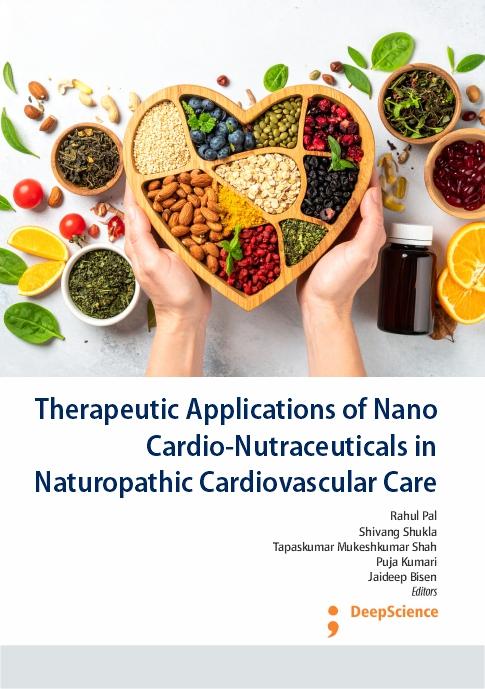
Rahaman, A. ., Ghosh, P. ., Jangra, S. ., Sharma, A. ., Akhtar, W. ., Tiwai, A. T., Mishra, A. ., & Bisht, A. . (2025). Cardio Nutraceuticals: Bioactive Compounds, Mechanism and Clinical Potential. In R. . Pal, S. . Shukla, T. M. . Shah, P. . Kumari, & J. Bisen (Eds.), Therapeutic Applications of Nano-Cardio-Nutraceuticals in Naturopathic Cardiovascular Care (pp. 31-48). Deep Science Publishing. https://doi.org/10.70593/978-93-7185-822-9_3
Download Citation





 WhatsApp +91 7977171947