

Polymeric and Solid Lipid Nanoparticles in Cardiovascular Nano-Therapeutics
Synopsis
Abstract
Cardiovascular Diseases (CVD) rank as the primary global cause of death which results in more than 17 million deaths each year. Atherosclerosis and endothelial dysfunction and plaque instability start to develop in CVD patients because of inflammatory processes. The disease becomes worse because people lead unhealthy lives through their poor eating habits and inactive lifestyles and their use of tobacco and alcohol. Conventional treatments require replacement because of multiple issues that include low drug solubility and rapid systemic clearance and imprecise targeting abilities and off-target toxicity and multiple side effects that include dizziness and stroke and gastrointestinal bleeding and electrolyte imbalance. The drug delivery systems based on nanotechnology provide a new solution which enhances stability and bioavailability and targeted delivery for medical applications. The two most effective platforms for cardiovascular treatment among different nanocarriers are polymeric nanoparticles PNPs and solid lipid nanoparticles SLNs. The chapter investigates the new field of nanoparticles which includes Polymeric Nanoparticles and Solid Lipid Nanoparticles as a method for treating cardiovascular disease. The research studies how these nanoparticles differ from one another through their solubility and stability and bioavailability and capacity to target blood vessels. The research presents both the safety regulations and molecular pathways which these formulations control while discussing their essential elements which must be considered for safety and regulatory approval and control over production. The final section of the document examines current developments and upcoming developments which include hybrid nanocarriers and personalized nanotherapeutics.
Downloads
Pages
163-184
Published
11 August 2025
Copyright (c) 2025 Rishabh Gupta, Utpal Bhui, Anindita Dewasi, Joy Das, Soumyadip Nayak, Rahul Bishayee, Sagar Shil, Swarup Sen, Souvik Basak, Rishabh Gupta, Thala Usha, Aathira Reghu, Ramachandran S , Rohit Agrahari, G.S. Chakraborthy, Rakhi Mishra, Ayush Gupta, Lata Singh Chandel, Sanjana Motwani, Bimlesh Kumar, Lata Singh Chandel, Vasanthi A V, Morziul Haque, Aarzoo Ali, Varad Anand Raut, Akhilesh Madhav Bhede, Akansha Bisht, Rajat Singh, Parth Bharadwaj, Akansha Bisht, Subhajit Chakraborty, Sanjana Motwani, Rajat Singh, Hriddhi Chakraborty, Prachi Priya Pandey, Susovan Borat, Shudesna Sarkar, Shipra Srivstava, Sonal Sharma, Partha Sarathi Das, Divya B K, Pratheep P, Kritesh Ojha, Sharvil Save, Damodar S. Goundar, Akansha Bisht, Atibur Rahaman, Priojit Ghosh, Sarita Jangra, Amit Sharma, Trupti Jadhav, Nitin Kumar Sen; Shivang Shukla, Tapaskumar Mukeshkumar Shah, Puja Kumari, Jaideep Bisen; Renu Sehrawat, Preeti Dahiya, Sonia Narwal, Akansha Bisht, Wasim Akhtar, Aradhana Tiwai, Jatin Agarwal, Priya Singh, Sonia Narwal, Manisha Chhikara, Renu Sehrawat, Preeti Dahiya, Sathish Kumar J D, Bala Vignesh K S, Mandvi Tiwari, Rajat Srivastava, Anubhuti Mishra, Akansha Bisht, Sunita Sahish, Kajal Sharma, Anuradha Singh, Deepshikha Dey, Prashant Kumar Gupta, Priya Tiwari Tiwari; Rahul Pal
How to Cite
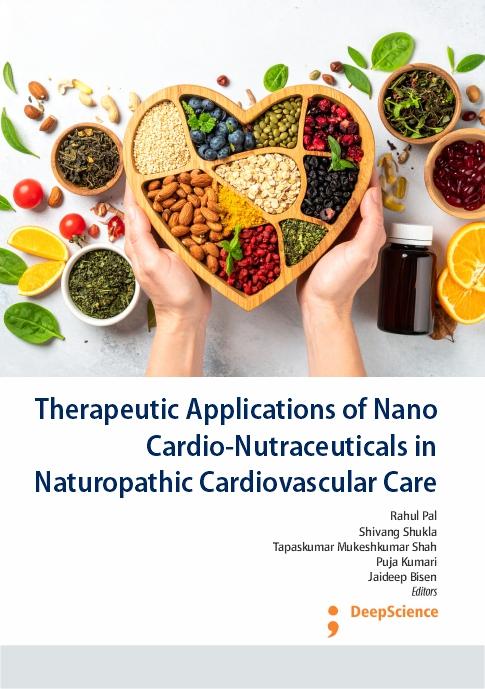
Reghu, A. ., & S, R. S. . (2025). Polymeric and Solid Lipid Nanoparticles in Cardiovascular Nano-Therapeutics. In R. . Pal, S. . Shukla, T. M. . Shah, P. . Kumari, & J. Bisen (Eds.), Therapeutic Applications of Nano-Cardio-Nutraceuticals in Naturopathic Cardiovascular Care (pp. 163-184). Deep Science Publishing. https://doi.org/10.70593/978-93-7185-822-9_8
Download Citation







 WhatsApp +91 7977171947