
Regulatory and Safety Challenges in Nano-Targeted Nutraceutical Development
Synopsis
Abstract
Nanotechnology presents newer ways for nutraceutical preparation of site-specific delivery, stability, and bioavailability of the bioactive compounds. Nevertheless, they face the major regulatory and safety issues, therefore limiting their commercial and clinical application. Given some nanoscale properties such as altered pharmacokinetics, surface reactivity, and cellular absorption, traditional approaches of safety evaluation are questioned. Existing regulatory systems are disparate, without unified definitions, uniform testing criteria, and harmonized approval processes for nanomaterials in food and health foods. Issues of long-term toxicity, biodistribution, off-target toxicity, and cumulative exposure also add to complexity in risk assessment. The current paper critically assesses the gaps in regulation and safety concerns surrounding nano-targeted nutraceuticals, with a focus on the importance of coordinating globally aligned guidelines that include nanotoxicology, risk benefit considerations, and consumer protection. Creating strong, science-informed policies is key to maintaining a balance between innovation and safety, allowing for the safe development of nanotechnology in the nutraceutical industry.
Downloads
Pages
254-270
Published
11 August 2025
Copyright (c) 2025 Rishabh Gupta, Utpal Bhui, Anindita Dewasi, Joy Das, Soumyadip Nayak, Rahul Bishayee, Sagar Shil, Swarup Sen, Souvik Basak, Rishabh Gupta, Thala Usha, Aathira Reghu, Ramachandran S , Rohit Agrahari, G.S. Chakraborthy, Rakhi Mishra, Ayush Gupta, Lata Singh Chandel, Sanjana Motwani, Bimlesh Kumar, Lata Singh Chandel, Vasanthi A V, Morziul Haque, Aarzoo Ali, Varad Anand Raut, Akhilesh Madhav Bhede, Akansha Bisht, Rajat Singh, Parth Bharadwaj, Akansha Bisht, Subhajit Chakraborty, Sanjana Motwani, Rajat Singh, Hriddhi Chakraborty, Prachi Priya Pandey, Susovan Borat, Shudesna Sarkar, Shipra Srivstava, Sonal Sharma, Partha Sarathi Das, Divya B K, Pratheep P, Kritesh Ojha, Sharvil Save, Damodar S. Goundar, Akansha Bisht, Atibur Rahaman, Priojit Ghosh, Sarita Jangra, Amit Sharma, Trupti Jadhav, Nitin Kumar Sen; Shivang Shukla, Tapaskumar Mukeshkumar Shah, Puja Kumari, Jaideep Bisen; Renu Sehrawat, Preeti Dahiya, Sonia Narwal, Akansha Bisht, Wasim Akhtar, Aradhana Tiwai, Jatin Agarwal, Priya Singh, Sonia Narwal, Manisha Chhikara, Renu Sehrawat, Preeti Dahiya, Sathish Kumar J D, Bala Vignesh K S, Mandvi Tiwari, Rajat Srivastava, Anubhuti Mishra, Akansha Bisht, Sunita Sahish, Kajal Sharma, Anuradha Singh, Deepshikha Dey, Prashant Kumar Gupta, Priya Tiwari Tiwari; Rahul Pal
How to Cite
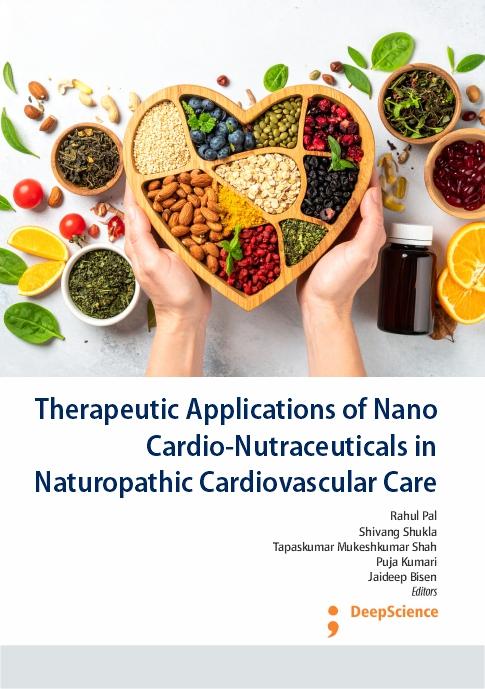
Borat, S. ., Sarkar, S. ., Srivstava, S. ., Sharma, S. ., Chakraborty, S., & Bisht, A. . (2025). Regulatory and Safety Challenges in Nano-Targeted Nutraceutical Development. In R. . Pal, S. . Shukla, T. M. . Shah, P. . Kumari, & J. Bisen (Eds.), Therapeutic Applications of Nano-Cardio-Nutraceuticals in Naturopathic Cardiovascular Care (pp. 254-270). Deep Science Publishing. https://doi.org/10.70593/978-93-7185-822-9_13
Download Citation







 WhatsApp +91 7977171947