
Future Directions in Autonomous and Self-Governing Data Platforms
Synopsis
As vast amounts of data are generated, complex infrastructures are formed for storing, processing, exchanging, analyzing, and visualizing data across heterogeneous organizations. Despite the potential of industrial data ecosystems, collaboration remains a challenge due to the need for access to sensitive data, lack of established trust relationships for data-sharing and uneven incentive structures. Therefore, a direction toward the emergence of autonomous and self-governing data platforms, the work addresses research questions. The two proposed concepts—defined—are motivated by the desire for full automation of the data value chain and by the special requirements of the financial and healthcare sectors. The first concept seeks to automate technical processes and organizational relationships, while the second aims at automating the establishment, management, and dissolution of data-sharing agreements, enabling a “marketplace-like experience” for data sharing.
Autonomous data platforms, applied in healthcare, provide an environment for deep learning models to operate in a decentral manner without requiring mutual data sharing. Self-governing data ecosystems focus on optimizing data-sharing agreements among actors in the finance sector, and the new concept promises significant reduction in costs, risks, and time consumed in the data-processing chain. Foundations are detailed, complemented by supporting technologies such as privacy-preserving computation, compliance by design, and federated learning, and a range of challenges—spanning reliability, auditability, accountability, and explainability—are distilled.
Downloads
Volume
Pages
127-138
Published
17 August 2026
Copyright (c) 2026 Rohit Gorle
How to Cite
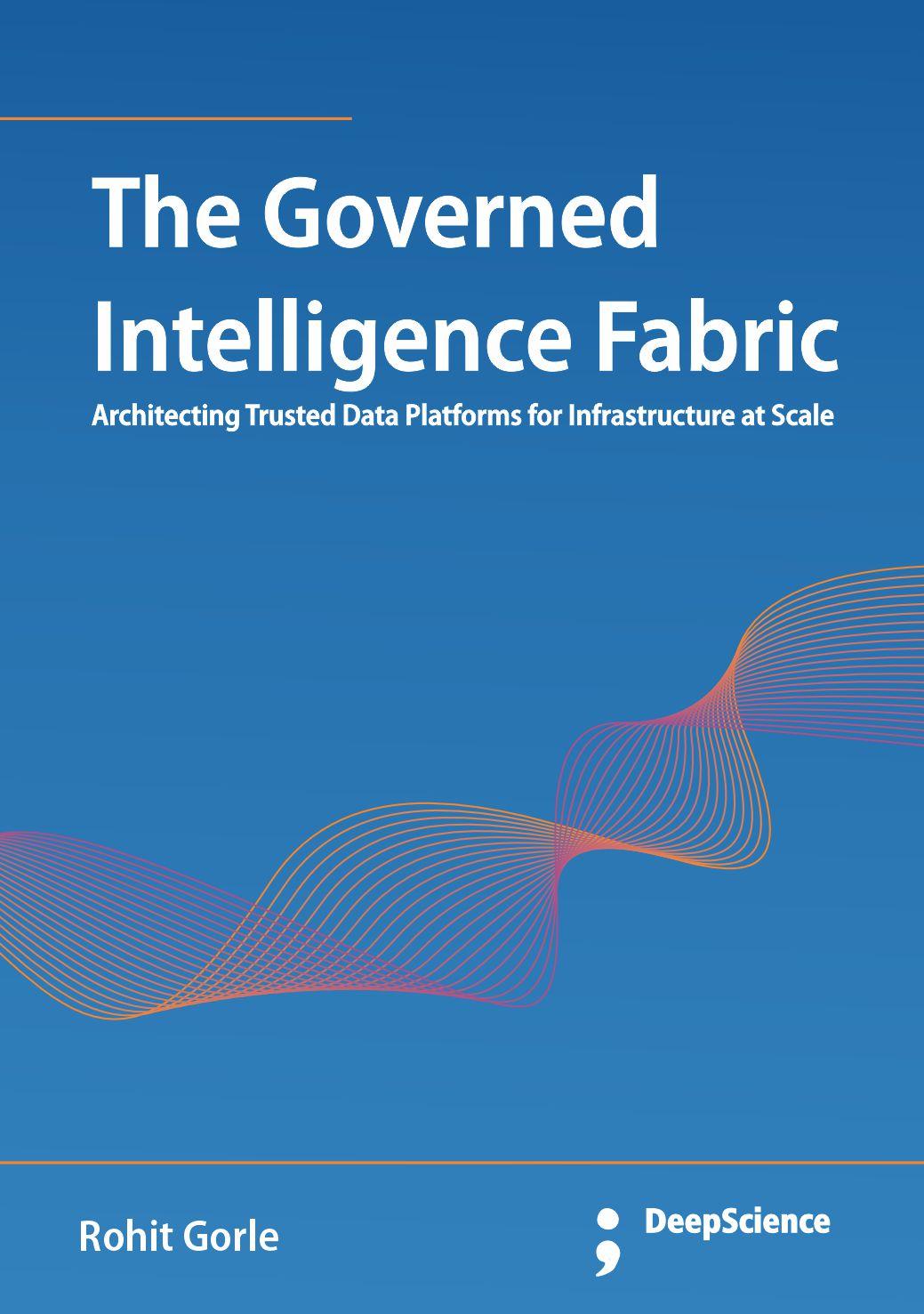
Gorle, R. . (2026). Future Directions in Autonomous and Self-Governing Data Platforms. In The Governed Intelligence Fabric: Architecting Trusted Data Platforms for Infrastructure at Scale (pp. 127-138). Deep Science Publishing. https://doi.org/10.70593/978-81-69589-32-1_10
Download Citation






 WhatsApp +91 7977171947