

Future Directions in Autonomous and Interconnected Healthcare Systems
Synopsis
The ultimate aspiration of health systems is a full capability for autonomous patient care. Autonomous intelligent patient monitoring and automated treatment administration are foundational capabilities that can substantively affect patient outcomes, particularly when integrated with a health system’s decision-support and workflow-engineering infrastructure. This capability can be realized within an interconnected framework that allows for continual learning and adaptive integration of additional systems and capabilities. The principle of interoperability extends beyond operational integration to encompass semantic coordination and system resiliency. Such advances have potentially transformative implications for future healthcare delivery by improving access, clinical outcomes, equity, and economic efficiencies. However, the principle of human-centric design remains paramount, with considerations of trust, safety, and societal acceptance shaping the trajectory of research and implementation.
Downloads
Pages
176-197
Published
9 April 2026
Copyright (c) 2026 Triveni Kolla
How to Cite
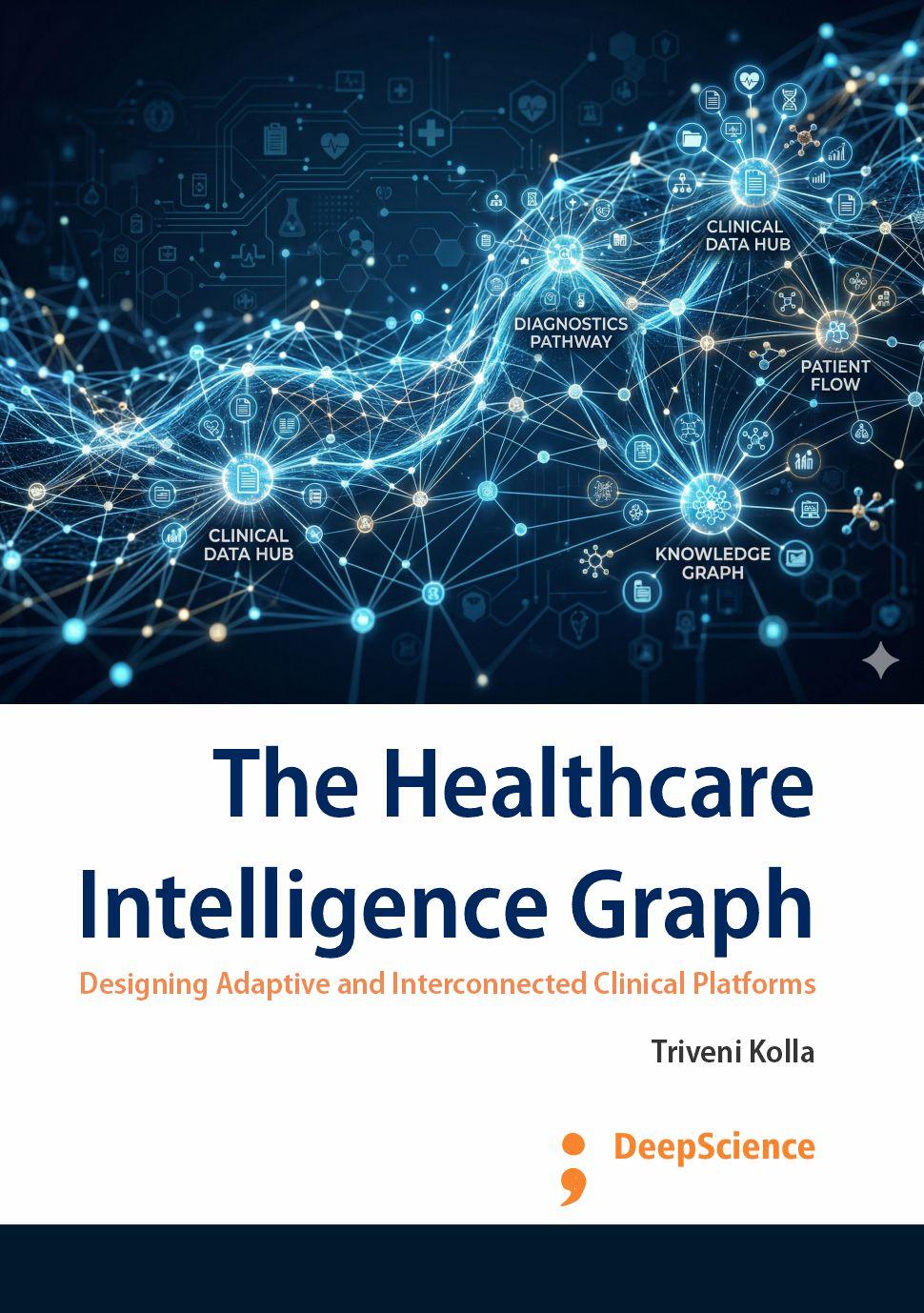
Kolla, T. . (2026). Future Directions in Autonomous and Interconnected Healthcare Systems. In The Healthcare Intelligence Graph: Designing Adaptive and Interconnected Clinical Platforms (pp. 176-197). Deep Science Publishing. https://doi.org/10.70593/978-93-7185-978-3_10
Download Citation










 WhatsApp +91 7977171947